HIR-005 · HOMEOWNER INTELLIGENCE REPORT
“Gradual”: The One Word That Kills Water Damage Claims — and the First 24 Hours That Decide Yours
A plain-English guide to sudden water damage, gradual leaks, and the documentation that begins on day one.
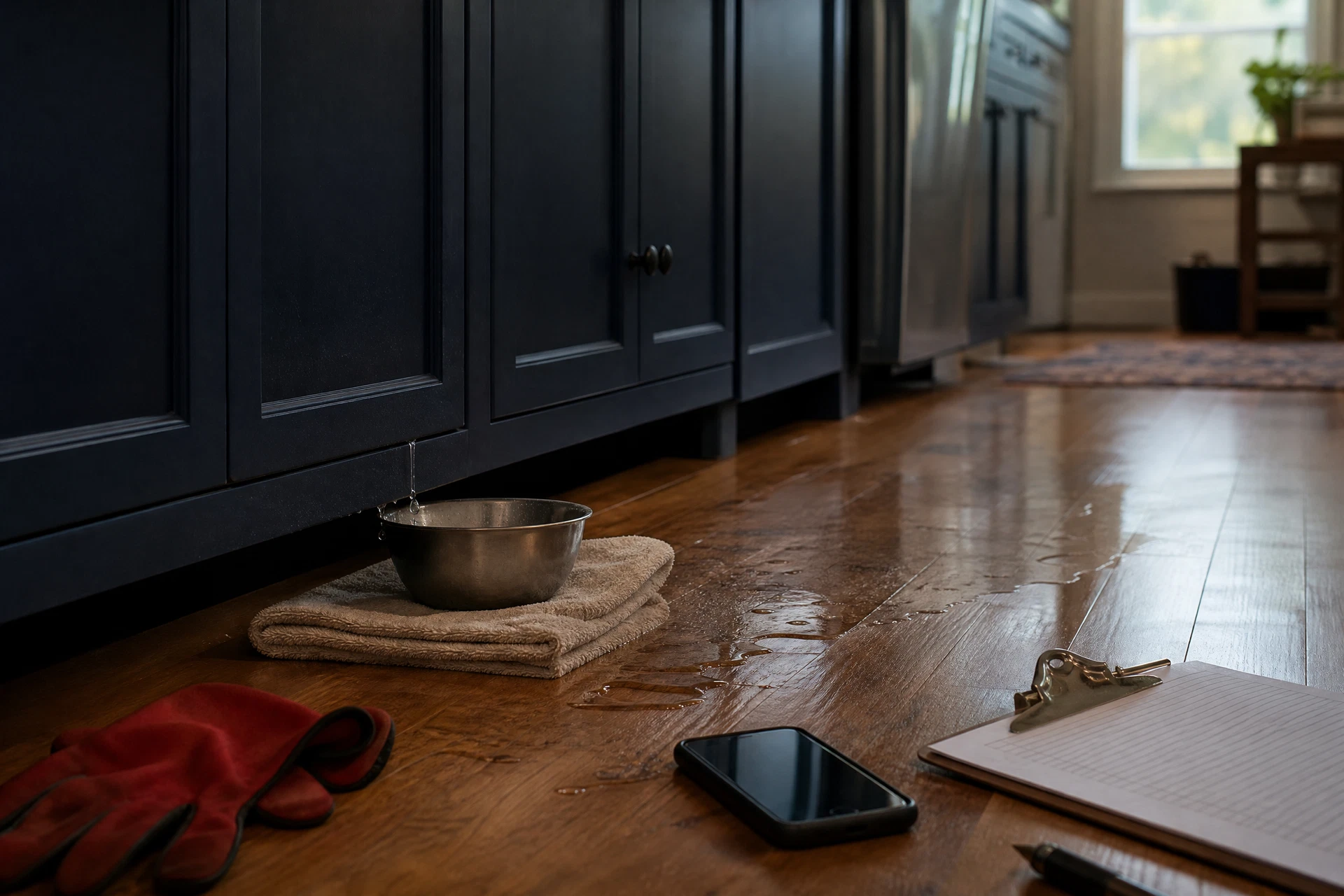
The Most Common Claim in America
Forget fire, forget theft — the claim your insurer is most likely to ever receive from you involves water. A burst supply line behind the washing machine. A water heater that lets go at 2 a.m. A pipe that freezes, splits, and empties itself into the ceiling below.
And here's what makes water claims different from every other kind: they are decided by a single word, and by a single day. The word is gradual. The day is the first 24 hours. Get those two things right and water claims usually pay. Get them wrong and you'll meet the most common denial reason in homeowner insurance.
Two Leaks, Two Letters
Picture two houses on the same street.
In the first, a washing machine hose bursts on a Tuesday afternoon. Water floods the laundry room and the hallway. The homeowner shuts the valve, photographs everything, calls a water mitigation company that evening, and files the claim the next morning. The insurer pays — because this is exactly what the policy covers: sudden and accidental water discharge.
In the second house, the same hose has been weeping for months behind the machine. The wall is soft, the baseboard is dark, and when the homeowner finally pulls the machine out, there's rot and mold behind it. The claim is denied. Not because the insurer is cruel — because the policy never covered this. Slow leaks are classified as gradual damage: a maintenance issue the homeowner is expected to catch. The denial letter will say something like "long-term seepage" — and it is the single most common phrase in water-claim denials.
Same hose. Same water. Opposite letters. The difference isn't luck — it's time, and whether you can prove which side of it your loss lives on.
The Rules Hiding in the Word
Sudden and accidental is the covered category. Burst pipes, failed water heaters, appliance supply lines letting go, an overflowing tub — one-time events with a before and after.
Gradual is the excluded category. Seepage, slow drips, deteriorated caulk, long-term leaks under a sink — anything the insurer can argue happened over weeks or months.
The twist most homeowners never learn — "resulting damage." In many policies, the worn-out part itself isn't covered (the corroded pipe, the failed hose — that's wear and tear), but the water damage that results from its sudden failure often is. So an adjuster saying "the pipe was old" isn't automatically the end of the conversation — the question is whether the release of water was sudden. That distinction has revived many a claim.
And the exclusions from our last report still stand guard: flood (rising water from outside) needs its own policy; sewer and drain backup is excluded unless you bought the endorsement; mold is capped or excluded except when it results from a covered sudden loss you handled promptly.
Why This Is Personal
The day before Thanksgiving, founder Tom Birney's home burned down — and the rebuild is still underway today. Fire taught him the lesson that applies double to water: the claim is decided by what you can prove, and proof is gathered in the first hours, not the first weeks. Policy Fighter exists so you know the playbook before you're standing in the puddle.
The First 24 Hours: The Playbook
Hour zero — stop the water. Main shutoff valve (know where yours is today — go look after reading this). Stopping the source isn't just practical; your policy legally requires you to prevent further damage. It's called the duty to mitigate, and insurers can reduce or deny payment for damage you allowed to continue.
Before you clean anything — document. Phone video of the source, the standing water, every affected room, the failed part itself. Photograph the water line on the walls. Keep the broken part — the burst hose, the split pipe section. That piece of plastic is your proof of "sudden," and mitigation crews will throw it away if you don't say otherwise.
Same day — dry it out. Call a water mitigation company (many run 24/7) or start extraction and fans yourself. Fast drying does two jobs: it limits the damage, and it closes the door on the mold argument — mold that grows because drying was delayed becomes your problem, not the policy's.
Within 24–48 hours — report the claim. Promptly, with your documentation. Reasonable emergency mitigation costs are typically reimbursable — keep every receipt, including fans, dehumidifiers, and tarps you buy yourself.
Say what happened, precisely. "A supply line burst Tuesday afternoon" is a covered sentence. "It's been leaking for a while" is a denial in your own words. Never guess about timelines — if you don't know when it started, say exactly that, and let the plumber's findings speak.
If the denial letter says "long-term seepage" anyway — that's a conclusion, not a verdict. Ask for the specific policy language relied on, get your plumber's written opinion on the failure, and remember the resulting-damage distinction above. Denials get reversed when the paper fights back.
The Five-Minute Prevention Audit
Since water is your most likely claim, spend five minutes making it less likely: find and label the main shutoff · replace rubber washing-machine hoses with braided stainless (the single highest-payoff $20 in home ownership) · glance under every sink quarterly · check the water heater's age (they fail on schedule — around year 10) · and at renewal, price the water/sewer backup endorsement — the cheap fix for the most commonly regretted gap.
Download our FREE Guide
"8 Questions That Reveal If You're Actually Protected"
[PolicyFighter.com/guide](https://policyfighter.com/guide)
Or take the [free 60-second test](https://policyfighter.com/quiz) — 8 questions, no email needed to see your score.
Then request your [FREE Policy Checkup](https://policyfighter.com/analyze).
Stay informed.
Stay protected.
— The Policy Fighter Team
Policy Fighter is an educational company. We are not an insurance company, a law firm, or a public adjuster. This report is for general educational purposes and is not legal, financial, or insurance advice. Coverage for water losses varies significantly by insurer, policy form, and state — always confirm details with your own policy documents and a licensed professional.
TAKE IT WITH YOU
Download the printable report
THE 60-SECOND TEST
Can you answer yes to all eight?
Find the gaps while there is still time to close them.
Take the free test